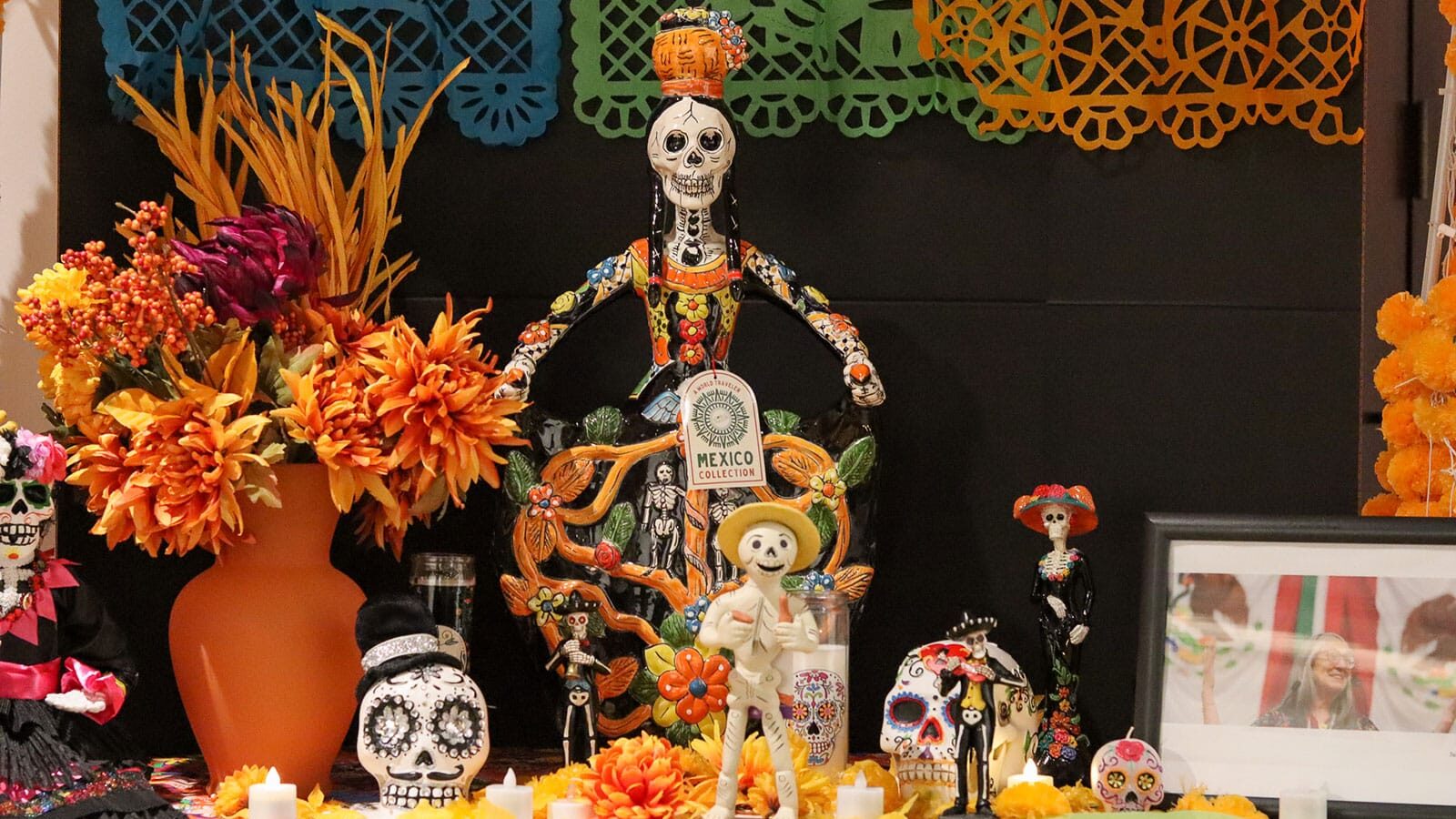
Día de Muertos Community Altar and Art Exhibit
October 10 - November 2


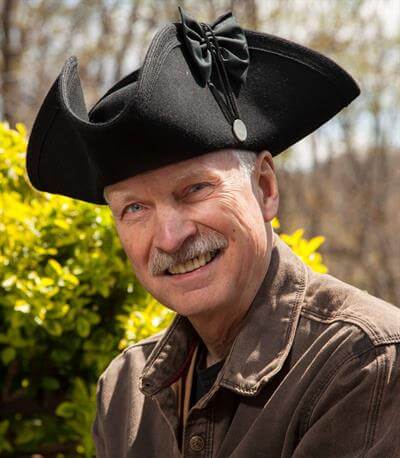
JOHN BUXTON
Born 1939 in Oxford, North Carolina; lives in Allison Park, Pennsylvania
On the Eastern Woodland Frontier, the birchbark canoe or dugout canoes were capable of much faster travel than on foot through thick old growth forests. Eastern Natives rarely had or used captured horses for travel because of the numerous waterways that conveniently connected most areas. Especially during Spring and Summer months, canoes were the preferred means of travel.
Those of you who have been canoeing in modern times, with modern canoes, may never have experienced the pure joy of a bark canoe. It is almost as light as a feather (when dry). It can easily be lifted above your head for transport. Because it is so light, though, in water, it handles better & is more stable when fully loaded.
DURING HIS CHILDHOOD IN NORTH CAROLINA, Buxton was constantly drawing and was encouraged by his parents. He never considered any other career other than that of producing artwork and paintings. This determination led to a degree in Illustration from the Art Center College of Design of Pasadena, California. Afterward, followed a thirty-one-year career as a successful and respected illustrator, receiving many awards and earning honorable recognition along the way. Among his most influential clients was the National Geographic Society. Its staff’s constant insistence on accuracy and double-checking everything produced struck a chord with John. He realized that here was artwork worthy of standing the test of time, and worth that extra effort to produce it.
In the early 1990s, his life and career changed from doing illustrations to researching the history that had shaped the very ground on which he now lives…western Pennsylvania. This new obsession led to total involvement in developing paintings that told an accurate story of the 18th-century Eastern Woodland Frontier: the story of a developing young nation of European settlers in conflict with many previously established Native Nations. Now, after over thirty years of earning respect and numerous awards, his paintings are used to teach history, to better explain the written word of 18th-century lore, and many of his paintings or reproductions adorn the walls of various museums and historical sites.
Gallery Representation
Lord Nelson’s Gallery, Gettysburg, Pennsylvania